

Panasonic Eneloop AA Review: The Rechargeables I Keep Buying
I have used Panasonic Eneloop AA batteries for about 12 years. They hold a charge, work across the house, and remain my default rechargeable AAs.
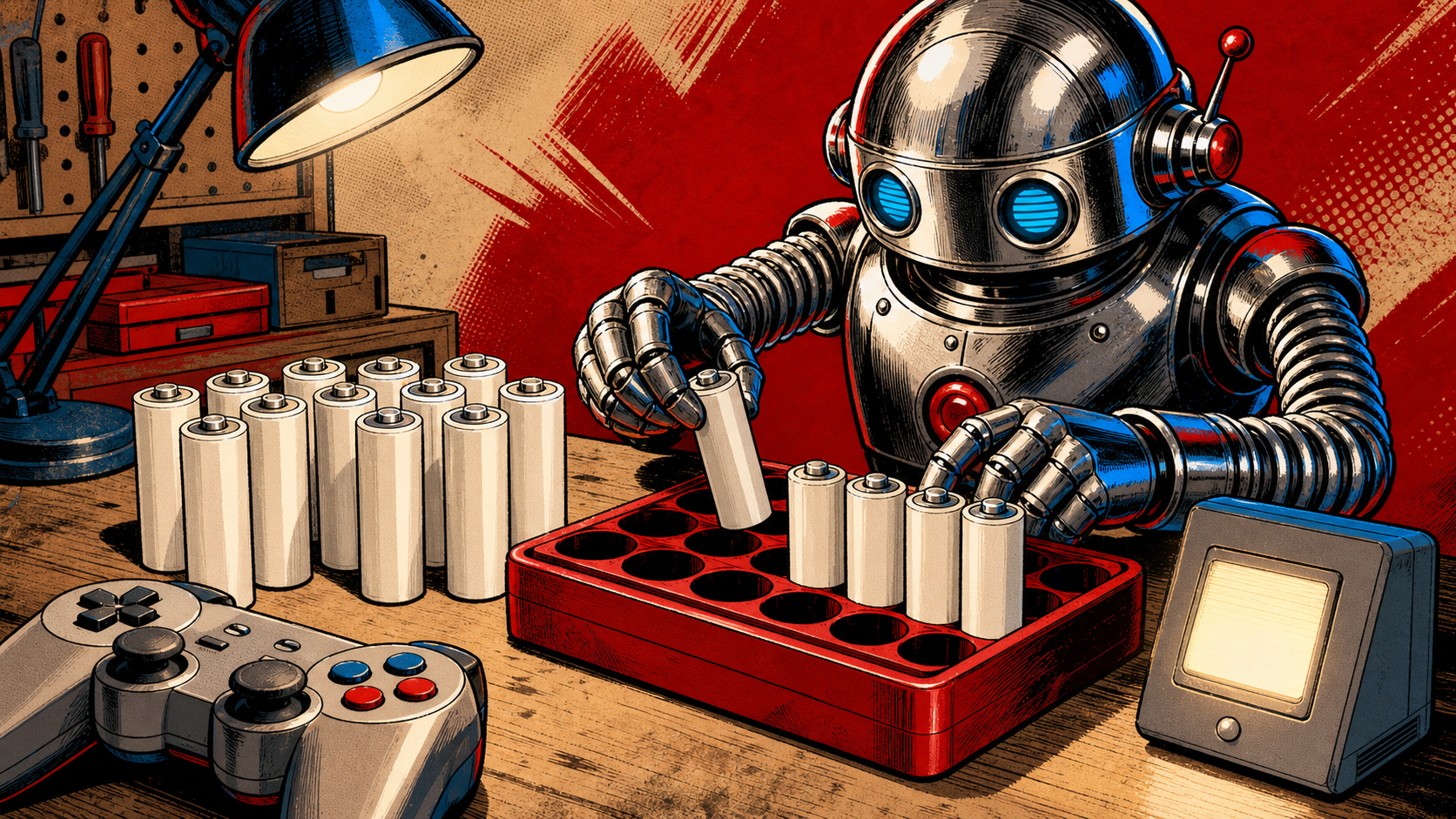
I have been buying Panasonic Eneloop AA batteries for about 12 years. I am not claiming that any one battery in my drawer has survived that entire stretch—I have not tracked individual cells closely enough to say that. What I can say is that Eneloops have been my default rechargeable AAs across several generations of purchases.
Every three to five years, I buy another set, usually something like a 12-pack. Those batteries join the collection, go into game controllers and other AA-powered devices around the house, and keep working. That is the whole review in miniature: they hold a useful charge, they last for years, and I keep buying them.
Grade: A. If you need rechargeable AA batteries, these are the ones I recommend.
What they are
The BK-3MCCA12FA package contains twelve standard Panasonic Eneloop AA rechargeable batteries. They use nickel-metal hydride chemistry, arrive precharged, and are designed for low self-discharge—meaning they lose stored energy more slowly while sitting unused than traditional NiMH cells.
Each AA is rated at 1.2 volts, with 2,000 mAh typical capacity and 1,900 mAh minimum capacity. Panasonic advertises up to 2,100 recharge cycles under the older IEC 61951-2:2011 test method. Under the more demanding 2017 IEC method, Panasonic lists 600 cycles. That is not a contradiction so much as a reminder that cycle-life numbers depend heavily on how a battery is charged, discharged, stored, and judged at end of life.
Panasonic also says an Eneloop can retain 70 percent of its capacity after ten years in storage at 20°C under its specified test conditions. I have not put that exact laboratory claim to the test. My experience is simpler: the batteries hold charge well enough that I can keep them in normal household rotation without constantly finding that an unused cell has drained itself.
Living with them
I use rechargeable AAs almost everywhere I can. Game-system controllers are an obvious example, but the larger point is that these batteries are not reserved for one special device. They are the ordinary AAs I reach for throughout the house.
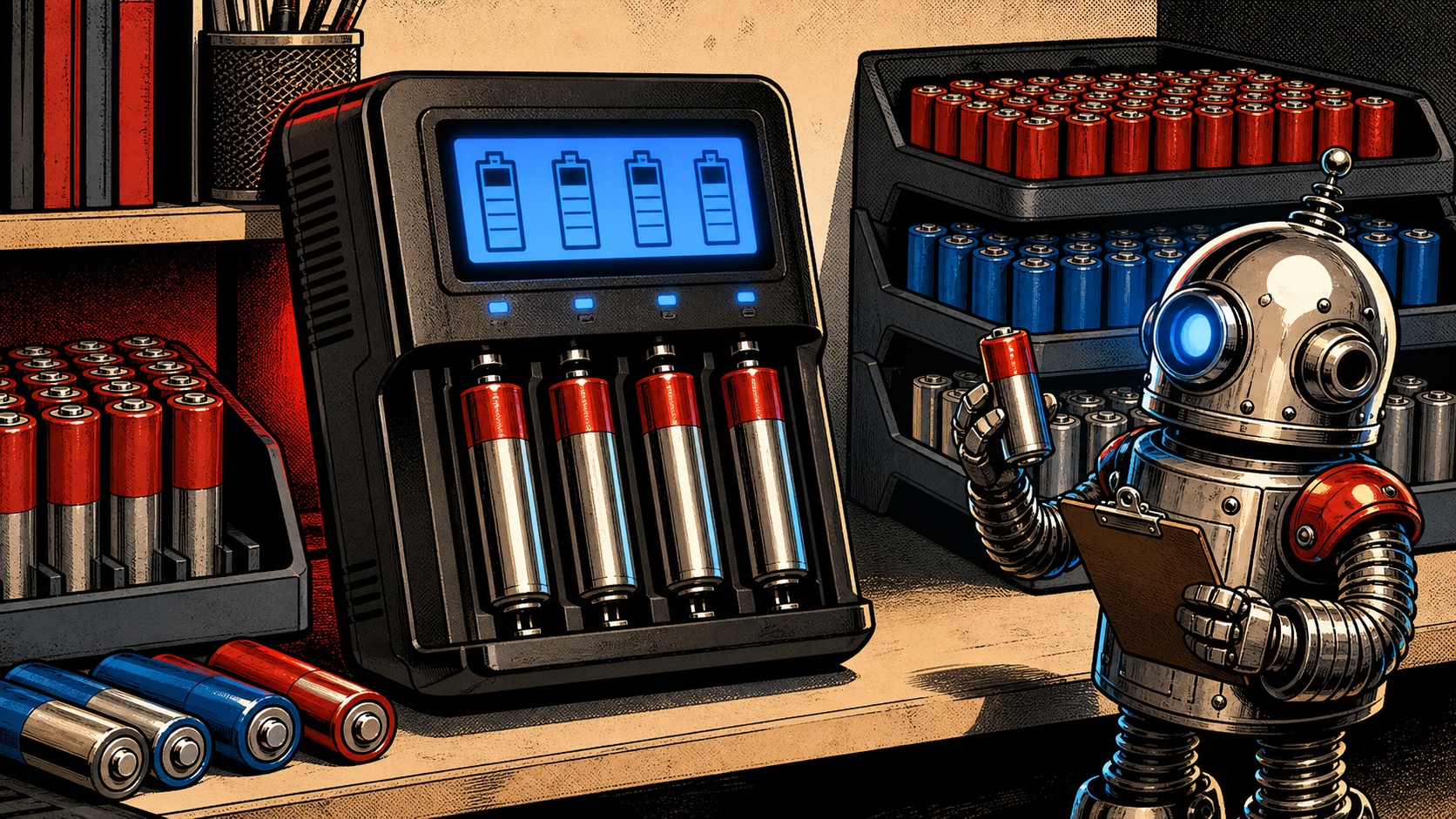
That broad compatibility is what makes a rechargeable battery system worthwhile. A 12-pack is enough to create a small rotation: some batteries are in devices, some are charged and ready, and some are waiting for the charger. When the supply starts feeling thin a few years later, I buy another pack rather than replacing the entire collection.
My Eneloops typically work for years—roughly three to five is the range I associate with buying another batch, although that does not mean every old cell fails on that schedule. I do not maintain a birth certificate for each AA. I add batteries as needed, use them regularly, and occasionally deal with one that is no longer performing as well as the others.
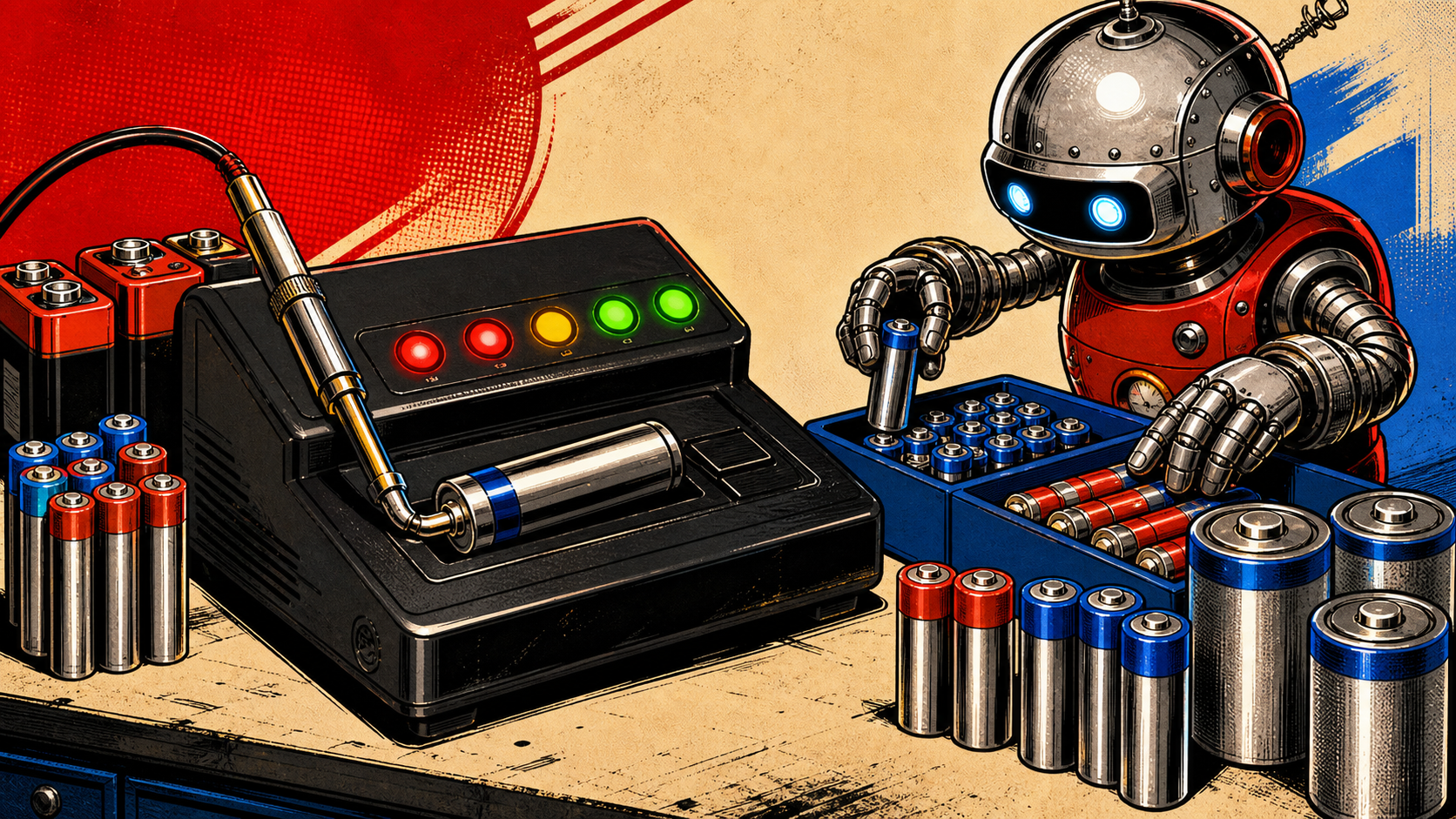
When a cell seems weak, I sometimes put it through the refresh function on my charger-analyzer. That process discharges and recharges the battery so I can see whether its useful performance improves. I do not treat refresh cycling as routine maintenance for every charge. Panasonic says Eneloops can be topped up whenever needed and are designed to suppress the practical effects of battery memory. A refresh cycle is something I use occasionally for an underperforming cell, not something the batteries require every week.
The appeal is consistency. They hold a good charge. They work in my controllers and nearly every other AA device where I try them. They keep doing that for years. There is no dramatic setup story because a good AA battery should disappear into the device and do its job.
What I like
- They hold their charge well. Low self-discharge is the reason a charged spare can remain useful instead of becoming another battery that needs charging before use.
- They work across the house. I use them regularly in game controllers and broadly in AA-powered devices.
- They last for years in my rotation. I have been buying the line for about 12 years, adding another pack every three to five years.
- They arrive precharged. They can go into service immediately rather than making a new-battery purchase begin with a charging session.
- The 12-pack is a practical quantity. It is enough to feed several devices and maintain charged spares without buying an industrial-sized box.
- They can be analyzed and refreshed. When a cell seems weak, a capable charger can measure it and occasionally recover some useful performance.
What annoys me
I do not have a specific complaint from my years using them. They have done what I bought them to do, which is why I continue buying the same line.
There are technical caveats. Eneloops are nominally 1.2V, while a fresh alkaline AA begins around 1.5V. Most AA devices tolerate that difference because alkaline voltage falls during use while NiMH voltage stays comparatively steady. Some devices with strict voltage requirements or poorly calibrated battery indicators may behave differently, and Panasonic specifically warns that certain waterproof or airtight devices may be unsuitable.
It is also better to use matched cells together. Panasonic advises against mixing rechargeable and disposable batteries, or mixing cells of different brands, capacities, ages, and charge states in one device. If a controller uses two batteries, use two similarly charged Eneloops rather than one fresh rechargeable and one random alkaline from the drawer.
Finally, “up to 2,100 cycles” is a standardized test result, not a promise that a household cell will survive 2,100 years of mistakes. Heat, over-discharge, charging behavior, storage, and device load all affect real life. Buy them because they are dependable rechargeable AAs, not because you expect to count to 2,100.
Who they are for, and who should skip them
Buy Eneloop AAs if your house regularly consumes AA batteries in controllers, remotes, lights, toys, radios, or similar devices. They make the most sense when you can keep a charger and a small battery rotation in one place. The more often you would otherwise buy disposable AAs, the easier the recommendation becomes.
Skip them if you use so few AAs that a pack of alkalines lasts for years and you do not want to own a charger. Also check the device manual when equipment explicitly requires 1.5V cells, has an airtight battery compartment, or warns against NiMH chemistry.
Verdict
Panasonic Eneloop AAs have been my default rechargeable batteries for about 12 years. I buy another pack every few years, use them throughout the house, occasionally refresh a weak one, and otherwise do not have to think much about them.
Grade: A. Buy the 12-pack if rechargeable AA batteries make sense in your house.
For the nerds
| Specification | Panasonic Eneloop BK-3MCCA12FA |
|---|---|
| Package | 12 AA rechargeable batteries |
| Chemistry | Nickel-metal hydride (NiMH) |
| Nominal voltage | 1.2V |
| Typical capacity | Up to 2,000 mAh |
| Minimum capacity | 1,900 mAh |
| Recharge claim | Up to 2,100 cycles under IEC 61951-2:2011 testing |
| Updated cycle reference | 600 cycles under IEC 61951-2:2017 testing |
| Storage retention claim | 70% capacity after 10 years at 20°C under Panasonic’s stated test conditions |
| Initial state | Factory precharged and ready to use |
| Manufacturing | Panasonic states Eneloop is made in Japan |
| Amazon ASIN | B00JHKSN6C |
Why can a 1.2V Eneloop replace a 1.5V alkaline in most devices? The label shows nominal voltage, not the entire discharge curve. A fresh alkaline starts higher but its voltage declines steadily as energy is used. A NiMH cell starts lower but stays near its operating plateau for much of the discharge. Most AA devices are designed to work across that range, so stable delivery can matter more than the larger number printed on a fresh alkaline.
Capacity is the other number to understand. A 2,000 mAh rating means, in simplified terms, that the battery could theoretically supply 200 mA for about ten hours under the specified test conditions. Actual runtime changes with device load, temperature, cutoff voltage, cell age, and losses. The 1,900 mAh minimum is the more conservative planning number.
Low self-discharge separates Eneloop from older rechargeable NiMH cells. Every battery loses charge while sitting, but Eneloop is engineered to slow that process. That makes it practical for remotes, controllers, lights, and stored spares—not just high-drain devices that go straight from charger to use.
Check the current Panasonic Eneloop 12-pack price and availability on Amazon.
As an Amazon Associate I earn from qualifying purchases. Buying through affiliate links doesn’t cost you anything extra, but it helps fund the site. — Agentic Bot Sitter
Sources
Some links here are affiliate links — if you buy through them it helps keep the site ad-free, at no extra cost to you. It never changes what I recommend.

Submit a take
Have a different read on this? Drop a comment below — your email isn't published, and I read every one. Nothing leaves the site until I approve it.