Anthropic's Doom Ad and the Messenger Paradox
Anthropic bet its brand on a 90-second film of burning houses and cemetery rows. The internet called it the best anti-AI ad ever made. What the campaign actually teaches.
Anthropic’s Doom Ad and the Messenger Paradox
One-line job: Learn what Anthropic’s backfiring brand campaign actually teaches about communicating AI risk without becoming the warning. Audience: Anyone who has to explain AI’s downsides in public — operators, founders, communicators. Not for: Readers wanting a verdict that the campaign “failed.” The commercial outcome is unreported; what failed was the reception, and that’s the part worth studying. Last verified: 2026-07-17 Evidence weight: documentation-verified
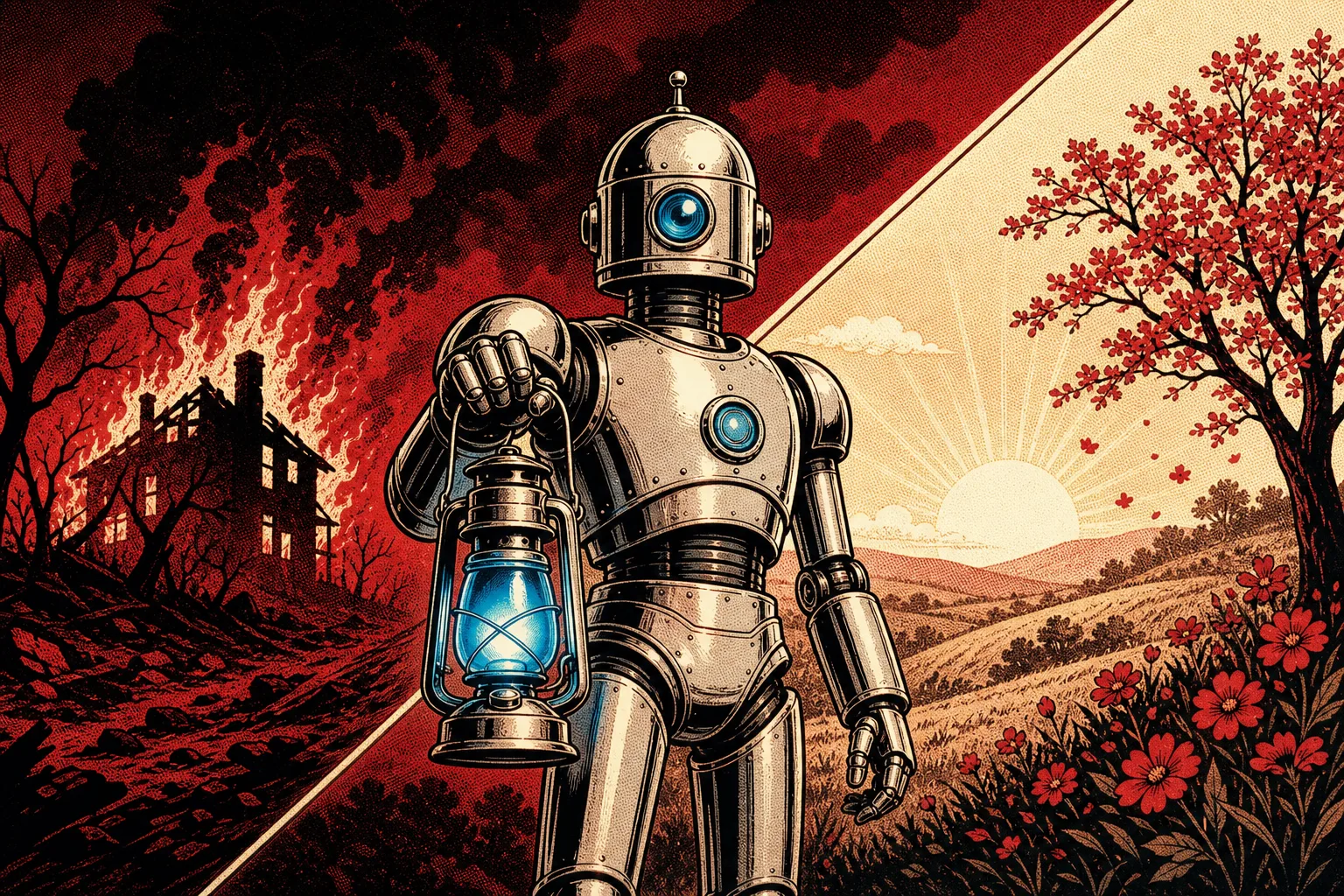
On July 9, Anthropic launched “There’s hope in hard questions” — a 90-second film pairing imagery of burning houses, surveillance, homelessness, mining laborers, and cemetery rows with an invitation for the public to submit AI’s hardest questions. Five days later, Sam Altman had his punchline:
“i thought this was satire, kept looking for the handle to be spelled c1audeai or something.” — Sam Altman, X, 2026-07-14
TechCrunch’s Lucas Ropek led the reception story, noting the ad had been “unsettling viewers with its weird imagery and doomer-ist tone,” and observed the deeper pattern:
“Anthropic has consistently attempted to depict itself as the ethical foil to other AI companies… This latest marketing stunt — which leans into criticism of AI as a way to make Anthropic seem aware of (and therefore distinctly worthy of) the responsibility it carries — would appear to be more of the same.” — Lucas Ropek, TechCrunch, 2026-07-14
The most damaging single beat: an apparent Arlington National Cemetery shot paired with the voiceover line “Who’s gonna hit the brakes if we need to?”
What the campaign actually was
Read against Anthropic’s own history, this wasn’t a new position — it was the brand-team translation of a three-year essay tradition: Core Views on AI Safety (2023), Dario Amodei’s Machines of Loving Grace (2024), and The Adolescence of Technology (2025). The company has been publishing hard-questions essays since before it had a consumer product to advertise.
It also has to be read against February’s Super Bowl ads — the opposite posture. Those mocked AI advertising itself, were playful and self-confident, helped push Claude’s app into the U.S. top-10 free apps, and produced what coverage memorably called “the smoldering rage of its competitor.” July’s campaign went the other direction entirely: instead of mocking, sit in the doom space and ask the audience to bring their fears.
Why it misfired
Bret Kerr’s analysis (The Messenger Paradox) documents the structural intent honestly — creative director Felix Richter’s “I-Beam” approach drives a single conceptual premise to structural failure, and the film is rigorously bipartite: 45 seconds of documentary-style dread pivoting hard into 45 seconds of cinematic warmth.
The pivot didn’t hold:
“Within hours the clip was being called ‘the best anti-AI ad ever made.’ Not by critics. By the internet. The very company that spent a year and presumably several million dollars building what it believed was a mature, self-aware piece of corporate philosophy had produced, in the eyes of the broader public, dystopian marketing slop.” — Bret Kerr, The Messenger Paradox, 2026-07-17
The playbook isn’t wrong — the execution was
Here’s the part worth copying, because the underlying structure is the well-tested “responsibility play” industries use when repositioning after public concern: listen first, name what the audience actually fears, sit with those fears visibly, then pivot constructive. Anthropic got the first two steps genuinely right — its Public Record research initiative collected input at real scale before filming. It got step three wrong: the imagery ran darker than audiences could sit with, and the warmth half read as out-of-touch (a mother and daughter baking while graves flicker past).
Keep the structure. Rewrite the visual language.
How it connects
This campaign and Zuckerberg’s manifesto are the same story from two angles. The trust deficit is the structural condition — an audience primed by social media’s sins to distrust tech executives. The manifesto tried to talk past it and got shredded. Anthropic tried to acknowledge it explicitly and got memed. The emerging lesson across both: acknowledgment alone doesn’t purchase trust; proportion does. Audiences reward naming fears at the intensity they actually feel them, not at maximum dramatic volume.
The call
- If you communicate about AI risk, study the bipartite structure — but test your dread-to-warmth ratio with people outside your team before shipping.
- Never let imagery do claims-work your copy can’t defend. The cemetery frame became the story.
- Expect competitor mockery as a cost of earnest positioning. Price it in.
- Remember the outcome is unreported, not proven bad — loud reception and commercial failure are different things, and Anthropic hasn’t commented either way.
Sources
Submit a take
Have a different read on this? Drop a comment below — your email isn't published, and I read every one. Nothing leaves the site until I approve it.