

AI's Energy Problem Is Now a Permitting Problem
61% of Americans worry about AI's electricity appetite. 70% oppose local data centers. And U.S. data centers may draw 6–12% of national electricity by 2028.
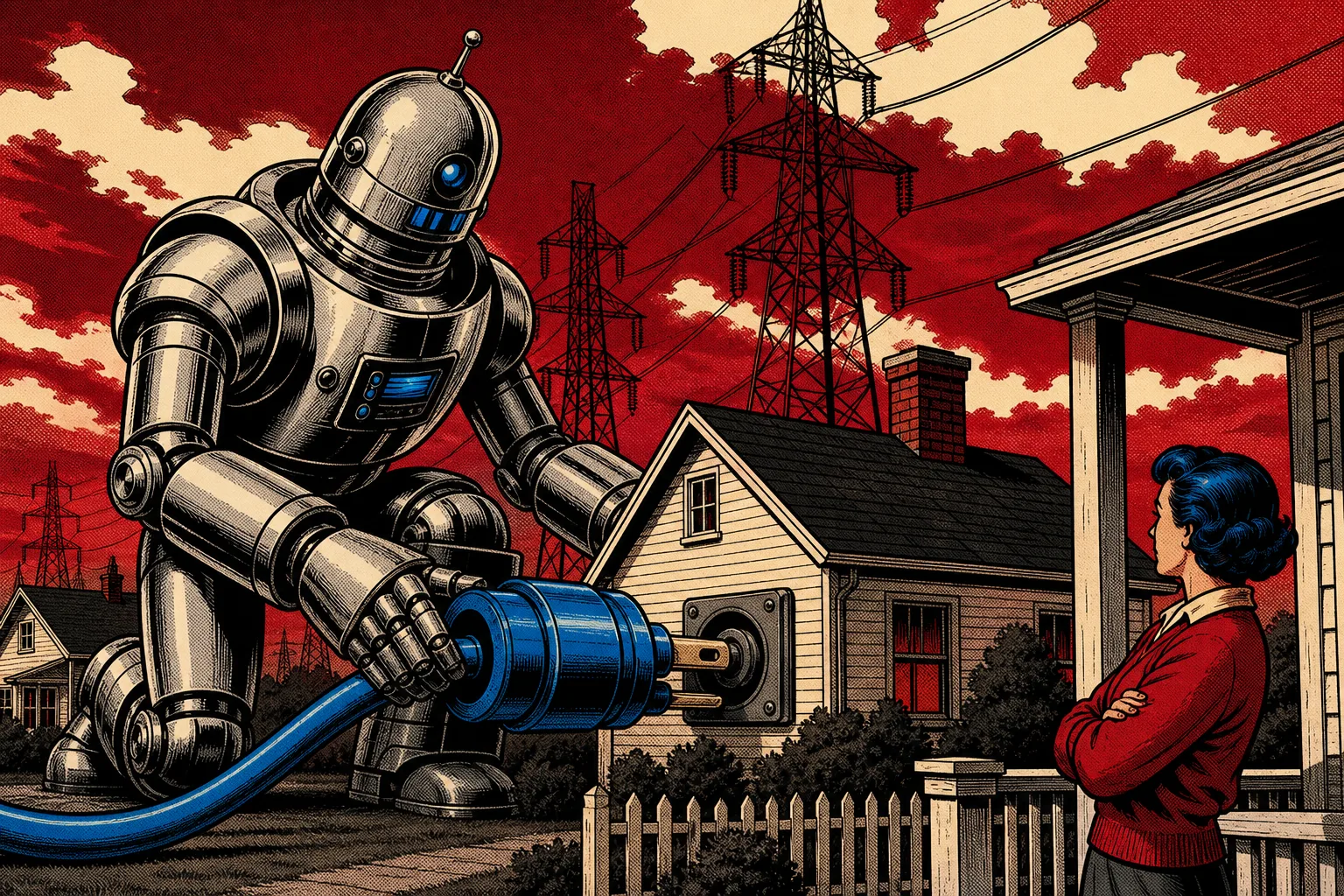
AI’s Energy Problem Is Now a Permitting Problem
One-line job: Understand how AI’s electricity appetite became local political opposition — and what it means for anyone whose roadmap assumes compute keeps scaling. Audience: Operators, planners, and anyone whose AI ambitions have a physical footprint. Not for: Readers wanting grid-engineering analysis. This is the public-opinion and deployment-constraint picture. Last verified: 2026-08-13 Evidence weight: documentation-verified
AI’s energy story used to be an abstract sustainability debate. Three numbers turned it into a concrete political constraint:
- 61% of U.S. adults are concerned about the electricity needed to power AI (Reuters/Ipsos, August 2025)
- 70% of Americans oppose AI data centers in their local community — 48% strongly (Gallup, March 2026)
- $64 billion in U.S. data center projects blocked or delayed by local activism over two years (Data Center Watch)
And behind the sentiment sits a load forecast that explains the building spree: Stanford HAI’s 2026 index projects U.S. data center electricity consumption reaching roughly 6–12% of total U.S. electricity by 2028.
Why this concern is different
Most AI concerns live in surveys. This one shows up at zoning board meetings. The trust deficit documented elsewhere in AI opinion research becomes physically load-bearing here: communities don’t just distrust the companies asking to build — they have veto power over the build itself through permitting processes that require no national consensus, only local votes.
That’s what makes energy AI’s most operationally binding concern. You can ship product past a skeptical public; you cannot ship a substation past one.
The global layer
KPMG’s cross-country study adds the international dimension: environmental impact clusters with privacy as a top-tier global risk, and 78% globally want governments to act on AI’s environmental footprint. Whatever jurisdiction you’re in, the direction of travel points toward disclosure requirements, efficiency standards, or both.
The honest complications
Two things keep this from being a simple story. First, the same polls showing local opposition coexist with communities actively courting data centers for the tax revenue and construction jobs — opposition is broad but not uniform, and it moves with deal terms. Second, efficiency gains per token are real; the demand growth simply outruns them. Both facts mean the constraint is political economics, not physics — which makes it negotiable, but only by parties who show up early.
The call
- If your roadmap assumes multi-year compute scaling, add permitting timelines to your risk model. They are now measured in community-meeting cycles, not construction schedules.
- Site selection is a trust exercise. The 70% number drops dramatically where developers arrive with grid investments, water answers, and noise mitigation before the hearing.
- Energy disclosure is becoming table stakes. Publish consumption before someone estimates it worse for you.
- Efficiency work (model compression, caching, right-sizing) now has a second payoff beyond cost: it’s the only part of the scaling story neighbors can hear without flinching.
Sources



Submit a take
Have a different read on this? Drop a comment below — your email isn't published, and I read every one. Nothing leaves the site until I approve it.