The AI Delivery Gap: Why Curing Cancer Won't Fix the Trust Problem
Anthropic's Dario Amodei conceded the AI industry hasn't delivered on its biggest promises. OpenAI's counter — the pharma parallel — is sharper than it first sounds.

The AI Delivery Gap: Why Curing Cancer Won’t Fix the Trust Problem
One-line job: Understand the sharpest critique of the AI industry’s 2026 messaging — and the pharma-parallel counter that changes what to do about it. Audience: Founders, executives, and operators whose AI promises depend on the industry’s reputation. Not for: Readers wanting vindication for either side. The honest position is more uncomfortable than either. Last verified: 2026-08-19 Evidence weight: documentation-verified
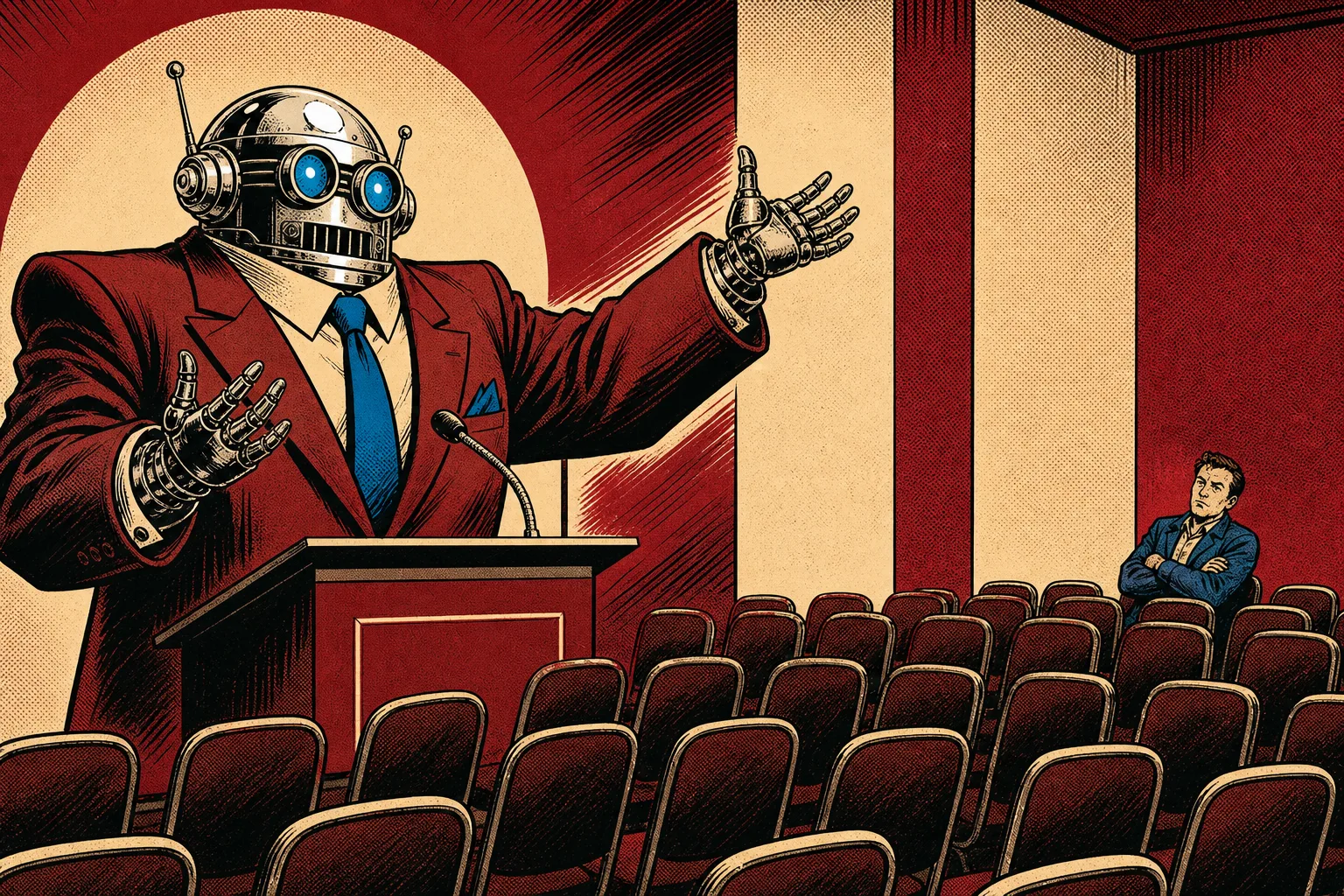
The single most important sentence an AI CEO said this month was an admission. On the August 17 AI Daily Brief episode, Dario Amodei conceded that the most accurate criticism of AI companies — including his own — is that they haven’t delivered on their big promises to benefit the world. Cure cancer, transform education, deliver abundance — the slogans are still outrunning the receipts.
One correction up front: this isn’t a gotcha. Dario naming the gap himself is the move that makes it useful, because the rest of the industry’s positioning has been working around the same gap for a year.
The pharma rebuttal
OpenAI’s Angel Brodin pointed out the parallel that’s actually sharper than it sounds. The pharma industry has delivered some of the greatest improvements in human health of the past century — and remains one of the least trusted U.S. industries per Gallup’s 2025 ranking, alongside the federal government and advertising/PR. Delivery and trust are not the same axis. You can deliver extraordinary concrete value and still be distrusted when your public posture outpaces your lived experience.
The implication for AI is uncomfortable: even if 2027 brings the cancer breakthroughs and educational transformations the rhetoric promises, the trust problem may not be solved by them.
Why the delivery gap matters commercially
Three reasons the gap matters beyond rhetoric:
- It erodes the credit line. Companies running AI on the back of frontier-lab narratives — the “this technology will change everything” pitch — are borrowing from a depreciating currency. Each undelivered promise lowers the next round’s discount rate.
- It raises the bar for credible operators. A field report like Replit’s 2.9×-per-engineer number becomes more valuable, not less, the louder the macro-claims get. Concrete receipts > visionary frames.
- It explains the regulatory pressure. The 31% American trust in own-government-to-regulate-AI number connects here: regulators and the public can smell the gap between promise and product, and the policy response scales accordingly.
What the rebuttal doesn’t say
The pharma parallel is real but it also implies a lesson the AI industry should not find comforting. Pharma’s trust deficit has persisted despite decades of delivered value because the public sees the delivery priced in ways that exclude them. AI’s likely trajectory is the same: deliver extraordinary value, but distribute it in ways that worsen inequality, concentration, or access — and the trust deficit compounds anyway.
The honest position
Replit’s Amjad Masad’s line, quoted in the same episode: “Scaling laws are not laws of physics.” That’s the right tempering. Capability is real and accelerating. Beneficial deployment is contested, distributed unevenly, and slower than the rhetoric. Both things are true; the gap is what makes the current moment hard.
The call
- If you’re an operator, audit your own delivery gap. What have you promised in public that you haven’t shipped? Name it before your critics do.
- Prefer specific results in your communications. Replit-style field reports age better than visionary framing.
- If you’re investing, weight execution moats heavier than narrative moats. The pharma parallel says even real delivery doesn’t secure trust; in AI’s case, the absence of delivery costs trust faster than delivery earns it.
- Treat the gap as a permanent condition, not a problem to solve. The industry that names its own limits credibly will own the conversation the industry that doesn’t.
Sources



Submit a take
Have a different read on this? Drop a comment below — your email isn't published, and I read every one. Nothing leaves the site until I approve it.